
My bike was stolen - what to do next
First hour
Speed matters. The faster you report and search, the better your odds with the police and your insurer.
The most critical first step is reporting the theft to the police. In most Australian states, you can call the Police Assistance Line on 131 444 or submit a report online through your state’s police website, though you should call 000 immediately if the theft is currently in progress. Obtaining a police report or event number is essential, as insurance claims may stall without one. When reporting, be prepared to provide the bike’s serial number, make, model, colour, frame size, and any distinguishing features.
Go through your photos
Any pictures of the bike on your phone help. Photos showing the full frame, components, and custom parts support both the police report and an insurance claim. A photo of the serial number - usually stamped under the bottom bracket, though it can also be on the chain stays, headset, or seat tube - is especially useful if you didn't record it elsewhere.
Contact your insurer
If you have bicycle insurance, start a claim immediately. Most specialist insurers let you file online. Have your policy number and the police report number ready.
Check the area
Stolen bikes sometimes get dumped nearby, especially if the thief wanted transport rather than something to sell. Check side streets, parks, and behind buildings. If you have a GPS tracker (AirTag, Tile, See.Sense), check it now.
First day
Once you’ve handled the official reports, widen your search by registering the theft on national databases like Project 529, Bikelinc, which connects directly with police in WA, ACT, and Tasmania, and BikeVAULT. These registries are free and make your bike searchable by serial number nationwide. Ask the cycling community for help by posting photos and descriptions in local Facebook groups, Reddit communities like r/ausbike, and Strava clubs, as fellow cyclists are often the most likely to spot a distinctive stolen bike.
You should also keep a close eye on digital marketplaces like Facebook Marketplace and Gumtree, where stolen bikes often surface within a few days. Setting keyword alerts for your specific model can help you monitor new listings in your city and surrounding areas. It is also worth calling local bike shops to describe your bike; thieves sometimes attempt to sell stolen frames to shops or bring them in for quick servicing, and many mechanics are happy to help reunite owners with their gear.
If you have bicycle insurance
Here's what to have ready and what to expect.
You'll need the police report or event number, photos of the bike (taken before the theft), proof of purchase or valuation, and details of how the bike was secured - the lock type and what it was locked to. Lock requirements vary by policy, but most specialist insurers require a minimum standard for theft claims. If you meet that requirement, the claim should process smoothly.
With a specialist cycling insurer, the person handling your claim knows bikes. They can tell the difference between a Shimano 105 groupset and an Ultegra, and they assess replacement or payout based on actual market values for cycling equipment. That's different from claiming through home and contents insurance, where the assessor may not understand why a set of wheels costs $2,000.
Claims get held up when the lock requirement wasn't met, the police report is late or missing, or there's no proof of value. Lock properly, report immediately, and keep your receipts.
If you don't have bicycle insurance
Check your home and contents insurance. Your bike might be covered as a personal effect, although it can be complicated. The standard excess typically runs $600–$800, though some insurers charge less. The more important thing to understand is that portable contents cover - the part that applies when your bike is away from home - is usually an optional add-on, not included by default, and expensive bikes often need to be listed separately to be covered for their full value. If the bike's value is less than your excess, a claim won't result in a payout. For an expensive bike that you listed as a specified item, you may recover significant value, but you'll also likely see a premium increase at renewal. Check your PDS carefully before assuming you're covered.
Reducing the risk next time
Register your bike on Project 529, Bikelinc and BikeVAULT when you buy it. A police officer in WA, ACT, or Tasmania who recovers a bike with a registered serial number can return it to you. An unregistered bike is much harder to reunite with its owner.
Use a lock that matches the bike's value. A $30 cable lock on a $3,000 bike isn't security - it's a suggestion.
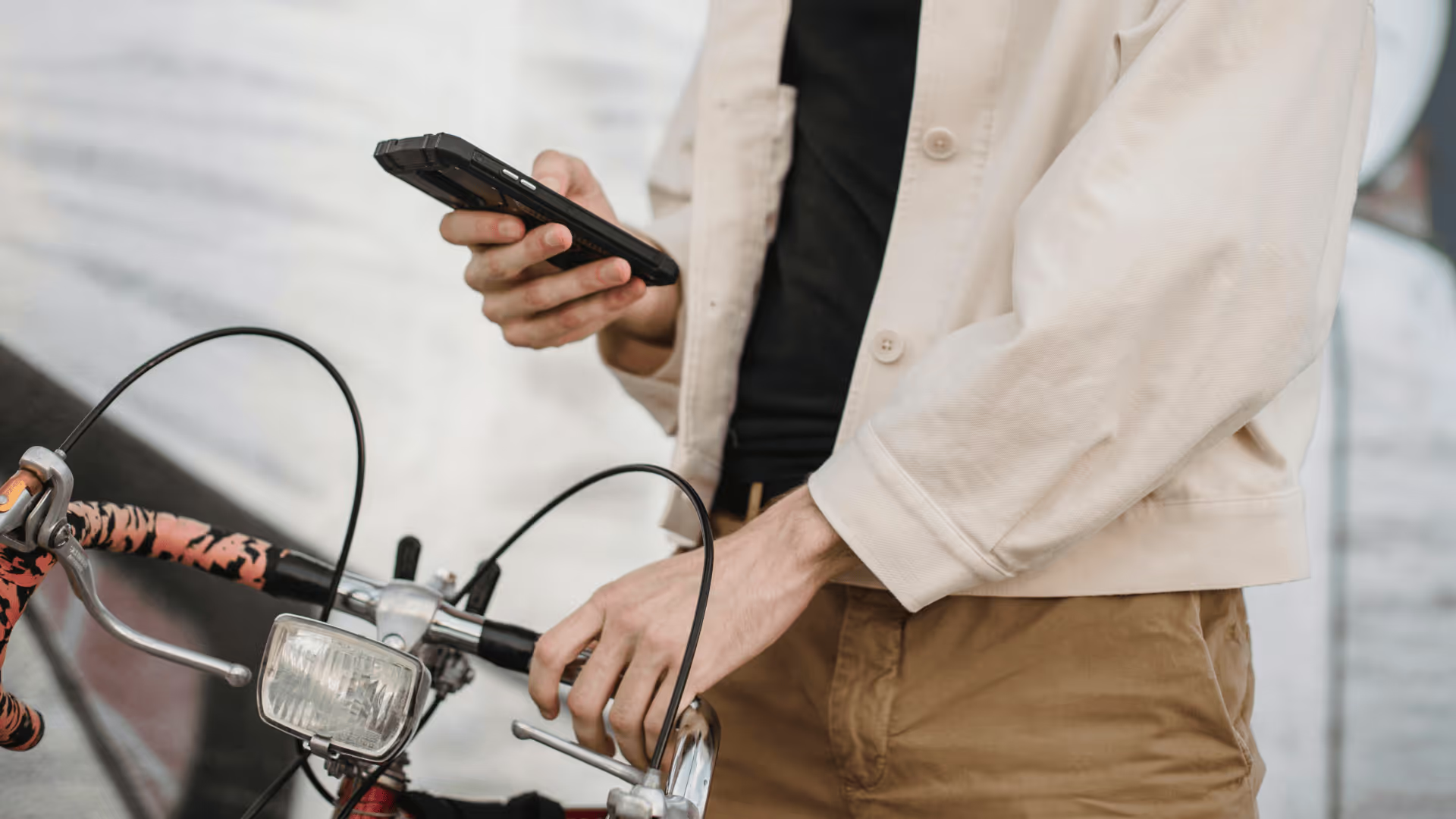
Lock through the frame and rear wheel to something fixed. Bike racks bolted to concrete are good. Street signs that can be lifted off their base are not. Think about what a thief with bolt cutters and 60 seconds could do.
Vary your routine if you lock the bike in the same place regularly. Thieves who work an area learn which bikes are there every day.
Get insured before something happens. Specialist bicycle insurance in Australia can be set up in minutes.